11.18.2010

Presenting The Wyly Theatre

After our book was due, shortly after that we had to give a PowerPoint presentation about our selected building. Instead of using PowerPoint, I'm a Mac kinda guy so I used Keynote and this is the images from my slides that I presented. And this is the video that I had embedded in one of my slides about the various seating configurations. 


I Made A Book!

Recently my 211 class completed a group project that basically required us taking all our work we had done on our selected building thus far and compiling it into a book. I work with Nicole Ware, Kara Kooy, Leslie Canipe, Cassie Bradfield and myself. We each agreed upon template that'd we would all try and abide by, and from there we used Adobe InDesign and created a 8x10" book courtesy of Blurb. This is the final result that I uploaded via PDF from a website called Issuu, and I've gotta thank Suzanne for sharing this link! 


and this was the final product!


11.17.2010

Reading Comprehension #6

[1] A common theme of the early twentieth century found in Roth, Harwood, and Massey set the tone for an understanding of styles in architecture and design influenced by fine art. Selecting either Arts + Crafts or Art Nouveau, TRACE the influences of the selected style in more than two nations. In your answer, you should include evidence from the readings and at least two annotated images as support for your analysis of influences. [15 POINTS POSSIBLE]
Art Nouveau is French for “new art” and it was a style that came to rise at the turn of the 20th century and it affected many different areas of life, as well as design. The decorative arts had a major impact because of this style, and from it we received organic shapes in iron work and harmony in many different scales of a structure. Two examples of this that are traced back to different countries are that of the Casa MilĂ  by Antoni GaudĂ­ in Barcelona, Spain. The other example is the Austrian Postal Savings Bank by Otto Wagner in Vienna, Austria. 


[2] Originating at the Bauhaus and in the work of LeCorbusier, the so-called Modern movement deeply influenced design and architecture of the twentieth century. The great debate raised by this new approach to design involved the presence of the machine in the design process and final products. SPECULATE about the implications of “machines for living” and the famous dictum “less is more” on design today. Use at least one ARTIFACT, SPACE, or BUILDING in your answer, providing a salient image (cited) and annotation to help bolster your argument. [10 POINTS POSSIBLE]

Corbusier’s goal in creating the ideology of “machines for living” was that architecture itself would be as easy and effective as factory assembly. It’s a product regardless of the scale that could be mass produced eventually through making and learning from your mistakes. Many products now days we’re hand made at first but throughout the years have been perfected and have been able to manufactured in a timely manner such is the example of the Barcelona chair by Ludwig Mies van der Rohe. Another example is a building designed as part of the Case Study project, that being the Eames House or Case Study No. 8 by Charles and Ray Eames in Los Angeles, California. The structure of this house was to be constructed entirely from “off-the-shell” parts that were fabricated and assembled off site and then delivered to the site and eventually constructed there. 


[3] From the assigned pages in Roth, Harwood, and Massey, SELECT an image that you believe explodes the notion that Modern interiors and objects were black and white. Fully RENDER your own design exploration of that image through color, material, and light and appropriately annotate and cite the image to prove this point. [5 POINTS POSSIBLE]


11.12.2010

Reflections Summary

Abigail speaks about the reflections unit being a unit of revolutions, revivals, cycles and reforms. She begins by talking about the Baroque period and how so many different aspects of their lives were affected. Baroque changed and influenced architecture, music, furniture, art and culture and she states this era as being a movement filled with emotion, drama and rich ornamentation which I think we could definitely all agree upon. Baroque was a reflection of the Renaissance she says in which a holistic action took place that unified drama in many different areas of design and living. 


Linda goes on to talk about revivals in her post and also speaks of the Renaissance, which she says was a completely new style of design and architecture all together. An example she uses in that of the Supreme Court Building in Washington D.C., which is that of Neoclassicism. She characterizes features of this very building which include Roman things more than Grecian; such as the portico that features two rows of Corinthian columns.


And lastly we have Dajana (my wife) that talks about the 19th century and how this was a time in history where there was a major identity crisis in design. Working with ideas from the Renaissance and how everything basically was a spin off of that style. She talks about new materials coming into play such as iron and glass and steel and these people using these materials were the ones breaking the rules and really doing something different and new. 


11.11.2010

Alternatives Summary

Blakeni in her alternatives post defines alternatives by saying that it’s “a choice between mutually exclusive possibilities.” She then goes on to talk about the Gothic period that was one of enlightenment, scale, span, light. She describes the Gothic period so vividly making it feel so massive and powerful just like the crafts people wanted you feel in that very space. They wanted you to feel overwhelmed and feel exactly what that structure was for, you knew in that very space that there was something higher than yourself.


The next style we arrive at is the Renaissance, where Leslie says our very principles of design are created. It’s where rules are broken and where we finally see rise to some beautiful makings. She says that moving away from the Gothic style we get a chance for boundaries to be crossed, it’s where people start designing for themselves and finding themselves through the structures. 


And lastly in the alternatives unit we have Cassie that talks about how the Renaissance led to the next style, which is that of Baroque and later Rococo. She specifically talks about Bernini’s Cornano Chapel and the complexity of things happening inside it. She characterizes Baroque as having heavy architectural elements and being excessive, but she says Rococo was a response to that heaviness. Elements that incorporated in the Rococo narrower sways, shells, and other nature-inspired ornamentation. 


11.09.2010

CHAIRS, CHAIRS, CHAIRS EVERYWHERE!

Throughout the semester in History and Theory II we have been also working on these things known as chair cards. Well we recently wrapped them up... all 50! Some being tables because their part of a collection and such. Enjoy!


My Idol Has Returned!


a day I have been waiting for!


11.08.2010

POINT: REFLECTIONS

"He who knows best knows how little he knows."

-Thomas Jefferson

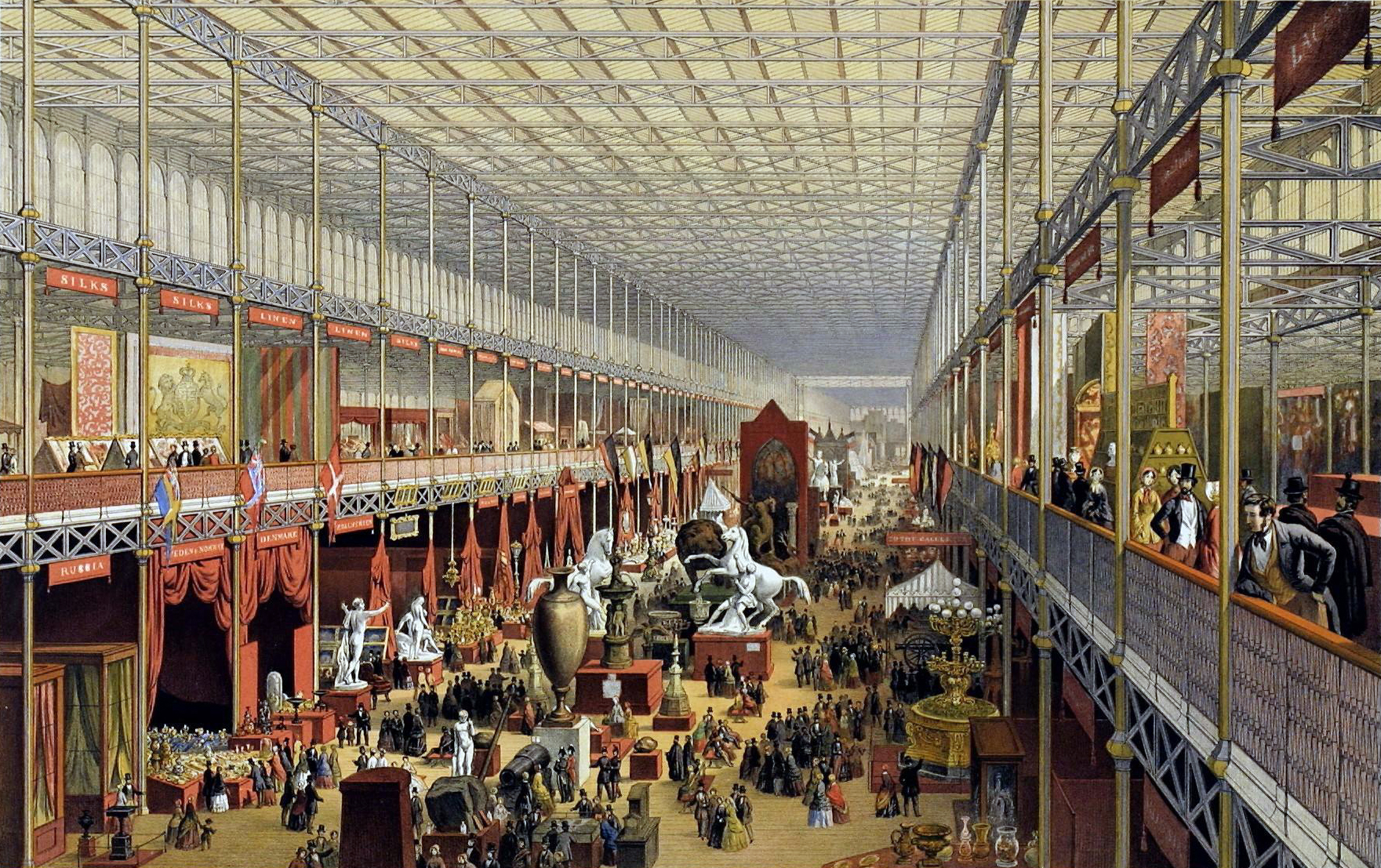
Reflections is the unit we began right after wrapping up the alternatives and we began with the infamous Baroque period. We talked about points that characterized the Baroque movement and those included: rich in fabrics and textures, excessive, ornamentation, applied surfaces, detailed oriented, made for the wealthy, a commonality in material selection, tapestry, and lastly stately. After defining what exactly Baroque was we moved into the structures that were built around that idea, and we looked at three different countries that were doing their own thing with it. The first being the Palace of Versailles in France which construction was done in four different campaigns with the first beginning in 1664. This is probably one of the more known sites because it features the spectacular hall that includes in total 357 mirrors. Next we moved to the country of England and there they had built a structure that is believed to be the best location of the prime meridian, and that is the Greenwich Observatory. The site overlooks the River Thames and it has played a significant role in the history of astronomy and navigation. Lastly we looked at the colonial North America and what was happening here, and we see the Palladian style still being used in the shape of Drayton Hall in South Carolina. From there we focused primarily on our country and what was just beginning to happen then starting with the Virginia Capitol Building built in 1785 by Thomas Jefferson. Another building, that which is a school also built by Mr. Jefferson is the University of Virginia and this site is a landmark because of it’s rotunda which originally was the schools library. We also talked about other buildings that were happening around the same time such as Monticello, the US Capitol, and the White House. Next we move to a new technology being produced within buildings, actually two technologies. Those technologies being the introduction of glass and iron which allows for a greater span, various shapes but along with its benefits comes disadvantages too. The first large-scale structure using wrought iron obersevred in class was the Kew Gardens; also features panes of glass throughout that are all hand-blown. From there, glass was being used in many different ways, and in many different forms. One of the most renowned places we talked about was the Crystal Palace built in 1851 for the Great Exhibition. It was constructed entirely out of cast-iron and glass and housed more than 14,000 exhibitions within which led the structure to span 1,851 feet in length. Somewhere along in the unit as well we talked about revolutions and I would say that the introduction of glass and iron created a revolution, it allowed for new creations, new ideas, different ways of doing things and from there it only progressed up (literally). Reflections is defined as a fixing of the thoughts on something, or simply just an image. You look at a mirror, you get a reflection cast back directly at yourself and that’s what I think this unit was about. It was about the present looking to the past for guidance and ideas but somewhere along the way, your view gets distorted and sometimes that can be good and other times not. Reflections are tricky because you want to dwell back on something that’s good and proves useful in its present era, you don’t want to revive something that has no use or sense being revived. 


11.03.2010

Reading Comprehension #5

[1] From the Roth, Harwood, and Massey readings, select an ARTIFACT you believe to represent revolution in design. SPECULATE about the type of revolution this artifact symbolizes. Supplement your answer with a beautifully hand rendered image of the artifact you selected, citing source and page on your image. [10 POINTS POSSIBLE]


Architecture and Interior Design Through the 18th Century: Harwood
pg. 313
The kitchen cupboard was an ARTIFACT which was used by the Germans as a form of storage. Typically a cupboard is a cabinet in which food, textiles and such were housed in to protect them from dust and dirt. However the one pictured above is more commonly known as a pewter cupboard because it consists of drawers and cupboards in the lower portion. And among the top there are a series of shelving units. These were used more to display crockery, silverware and general ornaments rather then hiding them away in the cupboard. I believe this piece is a revolution in some ways because before this time people really didn’t have a means by which to organize or display their belongings. In the American Colonial time people start having possessions in which they are now needing a solution to store them with, thus is the reason this product arose.
[2] Using the internet, LOCATE and ANALYZE an image for an ARTIFACT, a SPACE, a BUILDING, and a PLACE, drawing the idea of eastern influences as understood by nineteenth-century minds (China, Japan, India, Middle Eastern) on western design and architecture. Each answer must include an appropriately annotated and cited image in addition to a well-crafted essay to defend your choice of each image and the ways (more than one) that the material item responds to design influences from the east. [20 POINTS POSSIBLE]**


ARTIFACT


Porcelain was an artifact that wasn’t necessarily adapted to the western world, it was an object that was literally exported from China and other places. Typically the merchants vessels would deliver their cargo in New York and pieces would include coffeepots, soup tureens and eggcups. From there people would brighten up their houses with these colorful objects and display them for guests they had over. 

SPACE


Chinoiserie is a theme that occurred in Europe often which reflects Chinese artistic influences. It features contrasts of scale, asymmetry, and attempts to imitate Chinese porcelain. And no other western interior space exemplifies this more then that of the Royal Pavilion in Brighton, England.

BUILDING


While the interior displays Chinoiserie the exterior speaks a completely different language and that interior takes shape in the Indo-Saracenic style which is mainly prevalent in India. It has common features such as the finial, onion style dome, a drum, arches, and other things as well.  

PLACE


Lastly coming full scale to the place of this we have the Great Exhibition of 1851 in Hyde Park, London. This was the first in a series of World’s Fair exhibitions of culture and industry innovations and creations. The entire event was held and coordinated in the Crystal Palace, and there were 13,000 exhibits total that expanded from Austalia, India, Denmark and many many other countries and places. So of course this because like a jambalaya of design because you had so many different countries and so many ideas under one massive spanned structure.