

10.31.2010
The Hall of Mirrors
After the perspective counterpoint in history we were then supposed to create a clock and for my scale I chose a space in the paragraph form. With a clock I looked up mirrors and exactly how they functioned and I felt like Versailles was a good location with a rich history behind it.


10.25.2010
POINT: ALTERNATIVES
“Genius is eternal patience”
-Michelangelo

Once we left the foundations unit in class, we then proceeded to the alternatives unit which encompasses the Gothic and Renaissance period. The dictionary defines alternatives as “a choice limited to one of two or more possibilities, as of things, propositions, or courses of action, the selection of which precludes any other possibility.” Basically in layman’s terms this in my mind means that the people are taking what has already been built in society and altering it to create something new, yet refined. And the first era we dove into was the Gothic style and mostly that around France, the first site was that of the Amiens cathedral. The cathedral embodied so many different elements within it, and that probably is because throughout its construction it had three different architects. Carcassonne was next, and it is a town that was completely fortified, having only two outer walls that confine an entire location. Among other castles covered was that of Dover Castle, Stokesay Castle and Burg Eltz in Germany. After leaving France we got to the work from Italian architect Andrea Palladio and what he did at Villa Capra. Villa Capra mimicked the Pantheon in many ways but it considered all axises rather than two. Palladio was a person that brought villa’s to what we really know them as today by refining them in every way and eventually it led to a whole style known as Palladian architecture. Villa Barbaro was another villa, not done by Palladio though. This villa followed the same blueprint a standard villa would, except it shrunk in one dimension and gained much more in its overall horizontality. San Giorgio Maggiore is an island in Italy which is home to another Palladio structure. This one being the Church of San Giorgio Maggiore; and at this church you have a facade that is exceptionally white and is a temple manner. And also the facade has two faces that Andrea translates into one superimposed face. Next a site we covered that I really seemed to enjoy was the one in France known as Chateau de Chambord. And this building has really two styles that are being froze in its exterior; the first being the top and it is of the castle style and the lower portion being along the lines of neoclassical. Departing from France we looked at the Palace of Charles V in Spain and then Hardwick Hall in England. And looking across these three places you see just how different each country is building and how that carries on throughout their land. And finally our last stop in the alternatives section was at Florence, Italy and was a church by the name of Santa Maria Novella. Another stop we made in Italy was the home and the Medici family and their palazzo. This buildings features a facade that in divided into three parts that is emphasized by a horizontal band. In class we had wrote down the top ten rules of the Renaissance and they were as follows: single decorative facade, reviving the classics, man is the measure of all, separation of spaces, harmony through repetition, geometric patterning, patronage dominates the building industry, no building is one single style, boundaries/edges/borders are all vital, and finally separation of public/private. And I think throughout the entire span of the alternatives unit all of these guidelines are followed for the most part. So foundations are what we build upon but on those foundations we make alternatives for the entire world to see and the alternatives are still with us today. They just get translated so differently that we have the mindset that it's something completely different but really it's still home to some of those roots from previous eras.
10.19.2010
A Perspective Of San Giorgio Maggiore
Okay so this is now the second project for history that pertains to the alternatives unit, the last one being a compass and this one being a perspective. For this 8.5 x 8.5" I chose a place in Italy known as San Giorgio Maggiore which is my SCALE. And for the form I chose WORD and I chose to do some more digital manipulation with the island itself and I ended up liking the overall result.


10.18.2010
Reading Comprehension #4
[1] Just as we learned with Gothic cathedrals, in the context of each PLACE, the other scales of analysis (ARTIFACT, SPACE, and BUILDING) each demonstrate difference. For each scale on the readings rubric above, EXPLAIN at least one common design language that links them all. Use the principles and elements of design as defined for this class in your response. Explicitly tie the Roth reading to your analysis, using at least one cited quote. [10 points possible]


For the scale of artifacts amongst the five different styles I see lines being an element that is evident in all of them. From the desk incorporating all of the drawers, to the chair that has lines that embodies the entire piece; especially the backing. Next you have the clock that has vertical lines that are far more prominent that the horizontals of the object. Then there is the state bed that has lines that are most noticeable in the four posts that rise above the bed to hoist the shelter that encloses it; lastly you have the Sheraton side chair that also embodies lines in the same aspects of the Windsor chair.
The next scale is that of physical interior spaces, and for this I can see many different principles such as space itself, texture, balance. Texture is the one I find most interesting because texture is something we know about but we don’t really pay attention to just how much texture is around us and what’s different about each and every one of those. And the interior’s are where you’ll find many different textures from the floor whether it’s wood, carpet, tile to the specific furniture and upholstery that is applied to that piece. And all of these examples incorporate texture in many different ways, and also many similar ways.
Next there is the building scale and across these five different styles I believe repetition is one that you could argue. In most of these examples you’ll find columns, windows, brick work even that creates that sense of repeating something. It’s the way that element is chosen to be echoed on how it will affect the entire composition.
Lastly there is the place scale and since it is on a city wide scale it’s hard to determine certain principles or elements. But any city in it’s whole most likely embellishes that sense of unity with the entire city coming together, from it’s houses to whole blocks to whole areas to eventually it’s outer most limits. Also you’ve got contrast for sure in all of these places, not everything in a city looks exactly the same. You’ve got homes, houses, apartments, commercial complexes and whatever else that gives it a certain flare.
[2] Linked to Europe, the ARTIFACTS, SPACES, BUILDINGS, and PLACES of the American colonies echo closely their design forebears. Selecting evidence from all four scales for both the American Georgian periods, TRACE the common design ancestry across the Atlantic Ocean in the Neo-Palladian and Late Georgian periods of England and the Louis XVI/French Provincial period in France. ARTICULATE the implications of copying from Europe for the American colonies. Use the principles and elements of design as defined for this class in your response. Explicitly tie the Roth reading to your analysis, using at least one cited quote. [10 points possible]

When the English arrived to the Newfoundland they established colonies along the eastern seaboard. And with those new colonies that were being formed they reproduced the houses and furnishings they knew from their homeland. Using different materials for different purposes such as timber; they still managed to keep a consistency with there profound lines and symmetry in many different scales across Boston.
Next we have the Spanish and when they arrived they settled in the southwest and also Florida. More than the other colonists, the Spanish adopted local traditions and also developed a distinct architecture in numerous colonies. Although the forms somewhat stay consistent with what they know the materiality changes somewhat where in Spain you see mostly stone work and then in the new land you start seeing the use of adobe. And also in the furniture the consistency is clearly evident with carving being brought into many of the pieces once they were settled in their new environment.
The French settled in the Gulf of Mexico and also near the mouth of the Mississippi which brings us the New Orleans, Louisiana. The French were also similar to other settlements being that they recreated what they knew from their mother country. Their interiors and architecture were pretty simple but their furniture however borrowed from the high-style pieces. They also incorporated many techniques that they already had developed such as the steep pitched roof and half-timber construction.
Lastly we come to the Germans/Hollands that settled primarily in New York and Pennsylvania. German settlers, like the English brought over native medieval building and furnishing traditions to America. Once again when the Germans arrived in America they explored different materials; this material being wood rather than stone that was common to the homeland. The interiors of German homes were fairly simple but often colorful and walls were often whitewashed as well.
[3] From the Hersey/Freedman reading, DESIGN and POST a labeled floor plan of a possible Palladian villa inspired by Girolamo Frescobaldi’s Balletto Terzo found online at this site: http://www.metmuseum.org/toah/hd/renm/hd_renm.htm select the link on the left side of the page with Frescobaldi’s name under multimedias [5 points possible]

[4] Using the resources at the weblink below, SPECULATE about whether you believe that the architecture and design in the Baroque period stands as a form of social performance in the theatre of the world. Support your response with examples from class and the assigned readings. [5 points possible] http://fathom.lib.uchicago.edu/2/10701023/
Theatrum mundi is the term that I noticed most in the reading that translates to, the world is a stage. And I believe throughout the Baroque era this is what you see done, but it is done in the form on a solid architectural form. They take what is done on a stage by human beings and somehow attempt to mold that into a valid, structural place. Some common design characteristics in the Baroque period was a stronger emphasis on curves as well as more decorative details and ornamentation. Movement was something they tried to embody as well as optical illusions and many other things too. If you think about all these things you can somehow interpret it into something that a person would do in a theatre setting. Curves firstly, we as humans don’t move in a straight line, we do it in a very fluid and natural sort of manner. Next, theatre life is very planned and very organized to put on a good show and there is tons of movement that is captured throughout a performance. So yes, I believe very much so that the Baroque era was a form of social performance in every single way; you are witnessing a theatrical performance being paused and then shaped into a habitable and purposeful space.
10.09.2010

10.08.2010
ATTENTION!
IT IS TIME FOR...


and in case your wondering how I made that hologram like shot, it was made using this amazing app for my iPhone!
10.06.2010
POINT: FOUNDATIONS
"Beauty will result from the form and the correspondence of the whole, with respect to the several parts, of the parts with regard to each other, and of these again to the whole; that the structure may appear an entire and complete body, wherein each member agrees with the other, and all necessary to compose what you intend to form."
-Andrea Palladio
-Andrea Palladio
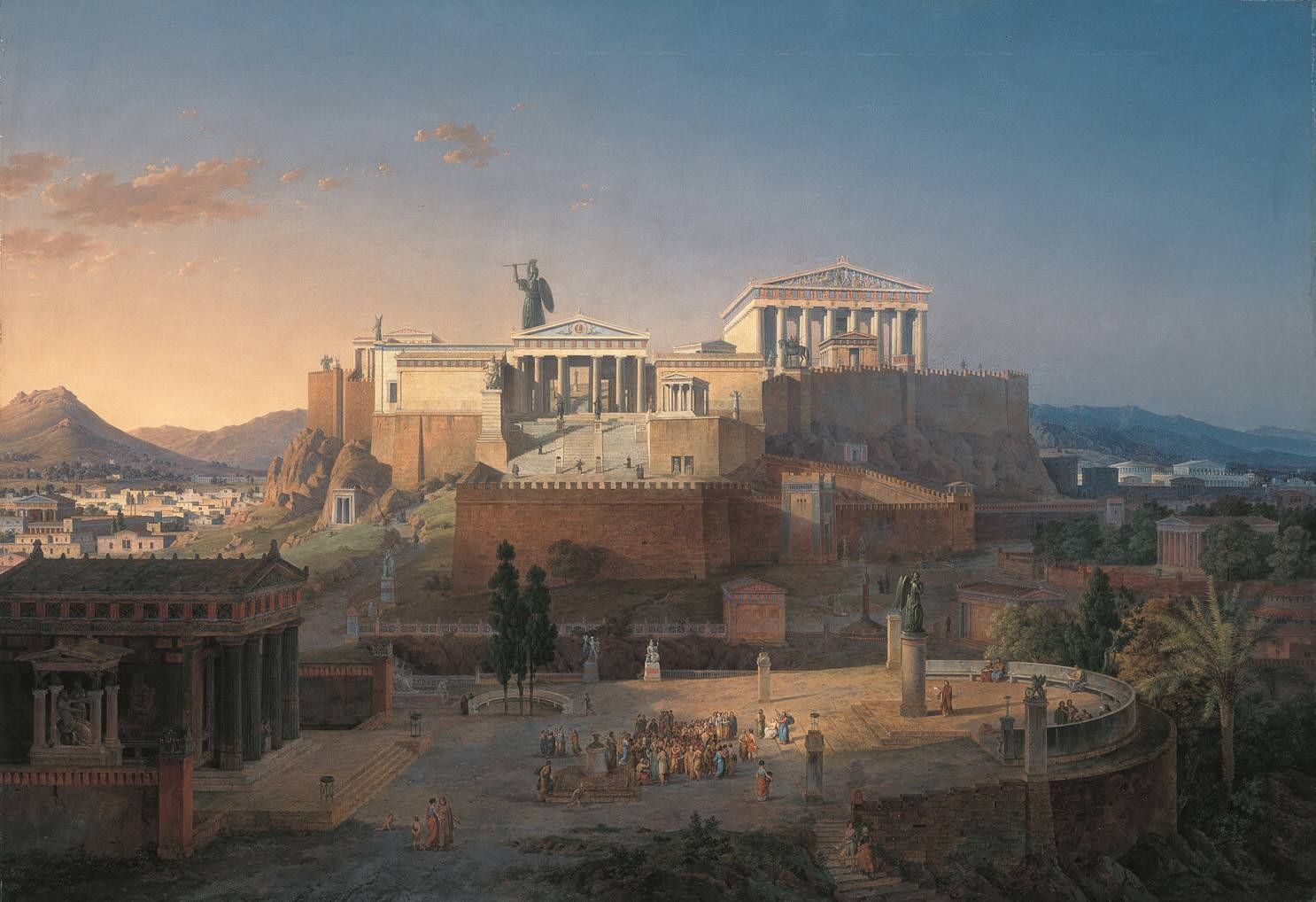
Upon leaving the theories unit in history in which we discussed Stonehenge and what not; we then proceeded to enter the foundations unit. Before getting into the foundations unit we had talked about building methods in which we had already explored. Those methods we had covered were circles (Stonehenge), lines (Hypostyle Hall), and finally stacking (Pyramids of Giza). And the foundations unit began with the first settlements really; those settlements would be Mesopotamia, China, Ohio Valley, and Teotihuacan. And in these the early settlements you had different forms appearing and also some common ground, in China you had a wall that was basically used to divide and identify a boundary among the land. In Ohio Valley you had a massive landmark that took the shape of a serpent. And another was Teotihuacan in which you actually had residential complexes being shaped and pyramids as well to form one larger inhabited city one could say. Then next we enter the legendary Greece in which we see the first area of Europe to have advanced civilizations emerge. And because of this we see things that are new but still borrow a little from previous. Incorporating some combinations of stacking, lines and also circles depending on how you look at it. Seeing these forms couldn’t be more justified than by looking at the site of Acropolis where you’ve got the Parthenon, Propylaea, Erechtheum, and the Temple of Athena Nike. After departing from Greece we enter Rome and it’s different I’d say. It’s about new technologies, materials, forms, living with the past and adapting to the present. And in Rome we see the first uses of concrete and vaulting and a new, exciting form... the dome. Possibly the hands down, most recognized structure in Rome is the Pantheon in which you’ve got a temple facade slapped right on the front of a massive dome backing the structure. Inside of the structure you’ll find a ginormous circular area which features a coffered dome that leads your eye upward to a gorgeous open oculus and allows the space to be naturally lit and lit differently depending on the suns direction. Throughout Rome you have new forms and techniques that appear; those being: bath, market/forum, basilica, coliseum, arch, temple, aqueduct, villa, dome, road and lastly the mosaic. So I think that’s basically in a (nautilus) shell that’s what the foundations unit covers. It’s about establishing what can be done and what will be done for hundreds and hundreds of years after they’ve passed on. It’s about leaving your mark as in Egypt, or bringing forth a tradition and passing on a legacy for others to follow as seen in Greece, and lastly it’s about being new and almost “modern” like in your ways and completely doing things in a new and upbeat sort of way like Rome. Foundations are what structures essentially are built upon and from there we can only build up or out and we have to choose from that foundation what we will do, whether it be something completely different and unseen or it be something that borrows on previous forms/structures.
10.01.2010
Reading Comprehension #3
[1] Compare and contrast the cathedrals according to the matrix. To illustrate your post, hand draw a view of your “main” cathedral, scan it and place it at the top of your response. Your written thoughts should fully illuminate the questions asked with each cathedral pairing on the website. Strive for 250- 300 words total for this response. Include additional images, as applicable, if you wish. Also check out the west vs. east page and digest what is written there (20 points).


Amiens vs Salisbury
The two cathedrals themselves were built starting in the same year but Amiens states in Roth that it was completed in 1269. However repairs we’re undertaken in the coming centuries pushing it up through 1410. And the two towers that were completed in 1410 were not consistent really with the previous design of the cathedral. This is where the Salisbury cathedral differs, it’s construction dates range from the year 1220-1258 meaning that throughout the entire construction process it has a single architectural style; that being early English gothic.
Amiens vs Cologne
The Cologne cathedral was built with the Amiens cathedral in mind the entire time; it’s plan, width to heigh proportion of its central nave and its overall architectural style. It’s plan follows that of a Latin cross which many Gothic cathedrals resemble. The Cologne is one of the world’s largest cathedrals and largest Gothic church in Northern Europe. I believe that both structures exemplify hierarchy and rich material throughout although similar. They were also similar in construction because they both to many centuries to really complete.
Amiens vs Florence
The language in which the Duomo speaks to me seems to make more sense in the Italy we know today, it’s a landmark for Florence and it’s rich with color and material just like the city is as well; the city incorporates that vibrant earthy red throughout Florence. And also the Duomo I believe is focusing on a more Renaissance like approach in that they are striving for new man-made technologies and encompasses a new sort of like dome technique. And the Amiens cathedral is a Gothic like structure in which height is important throughout its entire span and encompasses things we see in cathedrals to come.
[2] This illustration from A Medieval Home Companion depicts woman at work in a medieval interior. Unfortunately, the image is closely cropped so we don’t see much of the rest of the dwelling in which she works. Using Harwood and Roth, complete the rest of the scene using words and images to demonstrate your understanding of the domestic medieval interior (10 points).

I think this space would have a lot of truss sort of beams throughout the entire structure and a lot of wooden elements since it seems to be a house among the commoners. I also believe this would be a pretty bare space that probably only had within it the essentials, that being a table and possibly some chairs. Materials that were in this place would probably be that of wood and also some stone. And I also think that the space includes a kitchen because in this image she is obviously cooking and it appears that kitchen might be in the spaces main hall.


Subscribe to:
Posts (Atom)